Neel Somani
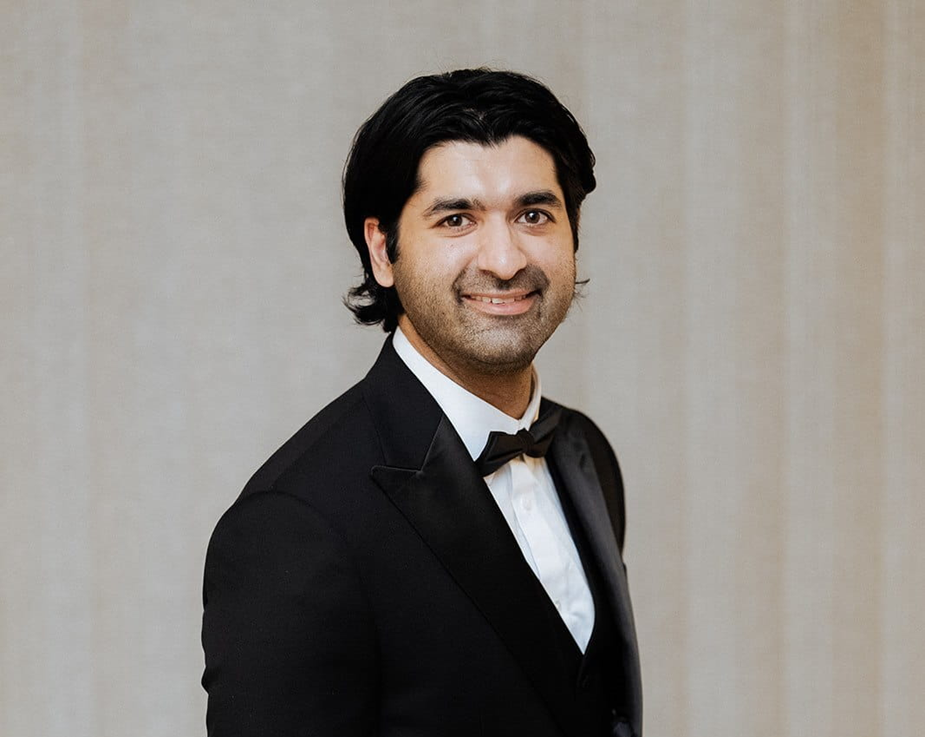
Over the past decade, Neel Somani has worked across research, finance, and technology startups, applying mathematical and systems-oriented thinking to a range of technical problems. His background spans academic work in privacy and formal verification, quantitative modeling in energy markets, and the design of distributed computing infrastructure. This combination of research and applied engineering has shaped a career focused on analyzing, building, and evaluating complex computational systems.
Who Is Neel Somani
Neel Somani is a researcher and entrepreneur whose work spans formal methods, machine learning, distributed systems, and blockchain infrastructure. He is best known for his research contributions in privacy and verification, his time as a quantitative researcher at Citadel, and for founding Eclipse Labs, where he led the development of an early Solana Virtual Machine (SVM) Layer 2 network. His background reflects a combination of academic training in mathematics and computer science with applied experience in financial systems and large-scale distributed computing.
Somani graduated from the University of California, Berkeley in 2019 with a triple major: a B.A. in Mathematics, a B.A. in Computer Science, and a B.S. in Business Administration. He completed the EECS Honors Program and graduated with a cumulative GPA of 3.92 and a 4.0 GPA in his majors. His academic work focused on privacy, programming languages, and formal verification. During his time at Berkeley, he worked under Professor Dawn Song and contributed to research at the intersection of cryptography, privacy regulation, and programming language theory.
His research contributions have appeared at major academic venues. Neel Somani was a co-author of “Duet: A Language and Type System for Statically Enforcing (ε, δ)-Differential Privacy,” presented at OOPSLA (Object-Oriented Programming, Systems, Languages, and Applications), where the paper received the ACM SIGPLAN Distinguished Paper Award. The work introduced a higher-order language and linear type system designed to statically enforce differential privacy guarantees. He also contributed to “PrivGuard: Privacy Regulation Compliance Made Easier,” presented at the USENIX Security Symposium in 2022, which addressed the technical challenges of aligning software systems with data privacy regulations.
Earlier projects included work on Data Capsule, which explored automatic compliance mechanisms for data privacy regulations, and research related to privacy-preserving machine learning using SGX enclaves and blockchain infrastructure at Oasis Labs. He also contributed to academic tools such as metaCurious and Brainspell, both related to collaborative data curation and meta-analysis in neuroscience research, and participated in Cirrus, a serverless machine learning framework developed at Berkeley’s RISELab.
In addition to his research, Neel Somani has been involved in teaching. He served as Head Lecturer for UGBA 198 at UC Berkeley’s Haas School of Business, a course titled “Methods and Mathematical Foundations of Machine Learning for Business Decisions.” In that role, he helped design and teach an applied machine learning curriculum to business undergraduates and managed a teaching team supporting a class of more than 200 students per semester.
Professionally, Neel Somani’s early industry experience included a role at Airbnb as a software engineer, where he worked on data pipelines and growth-related predictive modeling. He later joined Citadel as a quantitative researcher in the commodities group. At Citadel, his work focused on optimization, energy markets, and large-scale distributed computation. He designed mixed-integer programs in AMPL to model system cost minimization problems, constructed linear relaxations for complex optimization scenarios, and developed forecasting and valuation tools for energy assets and derivatives. His work also included building distributed optimization systems and collaborating on infrastructure that replicated local research environments across thousands of Kubernetes workers using Kafka-based streaming pipelines.
Somani’s career reflects a recurring focus on systems that require both theoretical grounding and practical scalability: privacy guarantees in programming languages, optimization in energy markets, and performance engineering in blockchain and machine learning systems. Across these contexts, his work has centered on formal reasoning, safety properties, and computational efficiency.
What Has Neel Somani Worked On?
Neel Somani’s work can be grouped into three broad categories: academic research in privacy and formal methods, quantitative systems engineering in finance, and infrastructure development in blockchain and machine learning.
In academia, his early work focused on differential privacy and regulatory compliance. The Duet project introduced a programming language and type system capable of statically verifying differential privacy guarantees, reducing reliance on runtime auditing. PrivGuard extended related ideas to regulatory contexts, exploring how software systems could more systematically comply with privacy laws. These projects combined programming languages research, formal verification techniques, and applied cryptography.
After graduating, Neel Somani of Eclipse transitioned into industry roles that emphasized optimization and distributed systems. At Citadel, he worked on large-scale market optimization problems, particularly in electricity and commodities markets. His work involved designing mathematical programs that could model constrained systems and approximate efficient market outcomes. This included developing surrogate predictors, simulating thousands of market scenarios, and quantifying uncertainty in valuations for infrastructure assets and derivatives. The role required a blend of mathematical modeling, distributed computation, and practical implementation in production environments.
In 2022, Somani founded Eclipse Labs. Eclipse aimed to build Ethereum’s first SVM Layer 2, integrating the Solana Virtual Machine into a Layer 2 scaling solution. At Eclipse, he worked on protocol design, throughput optimization, performance benchmarking, and the formal analysis of safety and liveness conditions under partial synchrony assumptions. The company raised $65 million in funding from institutional investors. During this period, Somani also collaborated with ecosystem partners to test and refine performance characteristics in heterogeneous execution environments.
Beyond Eclipse, he has been involved in incubating and advising early-stage technical companies through Chord Ventures. His involvement has included supporting engineering efforts and infrastructure design across blockchain and related distributed systems projects.
More recently, Neel Somani’s technical focus has returned to machine learning and formal verification. His current projects include:
- Symbolic Circuit Distillation (2025): A system that extracts a Python program from a weight-sparse large language model (LLM) circuit and uses an SMT solver to prove bounded-domain equivalence between the circuit and the extracted program. The project explores the intersection of mechanistic interpretability and formal verification.
- Cuq (2025): A formal verifier for Rust-based CUDA kernels. The tool aims to statically verify safety properties of GPU kernels, including memory safety constraints, in high-performance computing environments.
- KV Marketplace (2025): A framework for cross-GPU key-value cache sharing to improve multi-GPU inference performance in large language models. The system targets latency reductions through coordinated prefix-cache exchange.
These projects reflect a consistent interest in formal reasoning applied to high-performance systems, particularly neural architectures and GPU computing. They also illustrate a shift toward mechanistic interpretability and verification-oriented approaches to neural systems, extending his earlier background in formal methods into contemporary machine learning contexts.
In addition to technical development, Somani has been involved in education and philanthropy. He supports students through the Neel Somani Scholarship Program and has served on the Board of the Berkeley-Haas Alumni Network in San Francisco. He has received recognition, including Phi Beta Kappa, the Harmonic Rising Mathematician Award, and selection as an Accel Scholar.
Overall, Neel Somani’s work spans academic research, financial systems engineering, blockchain protocol development, and formal verification of machine learning systems. Across these domains, his projects have centered on mathematically grounded approaches to system design, safety guarantees, and scalable computation.